“Clicking some of the silly options”: Exploring Player Motivation in Static and Dynamic Educational Interactive Narratives
Hwang, D., Shields, S., Calderwood, A., Johnson-Bey, S., Mateas, M., Wardrip-Fruin, N., & Melcer, E. F. (2025). Clicking some of the silly options: Exploring Player Motivation in Static and Dynamic Educational Interactive Narratives. arXiv preprint arXiv:2505.08891.
Johnson-Bey, S., Liao, K., Shields, S., Hwang, D., Wardrip-Fruin, N., Mateas, M., & Melcer, E. (2024, December). Building Visual Novels with Social Simulation and Storylets. In International Conference on Interactive Digital Storytelling (pp. 145-161). Cham: Springer Nature Switzerland.
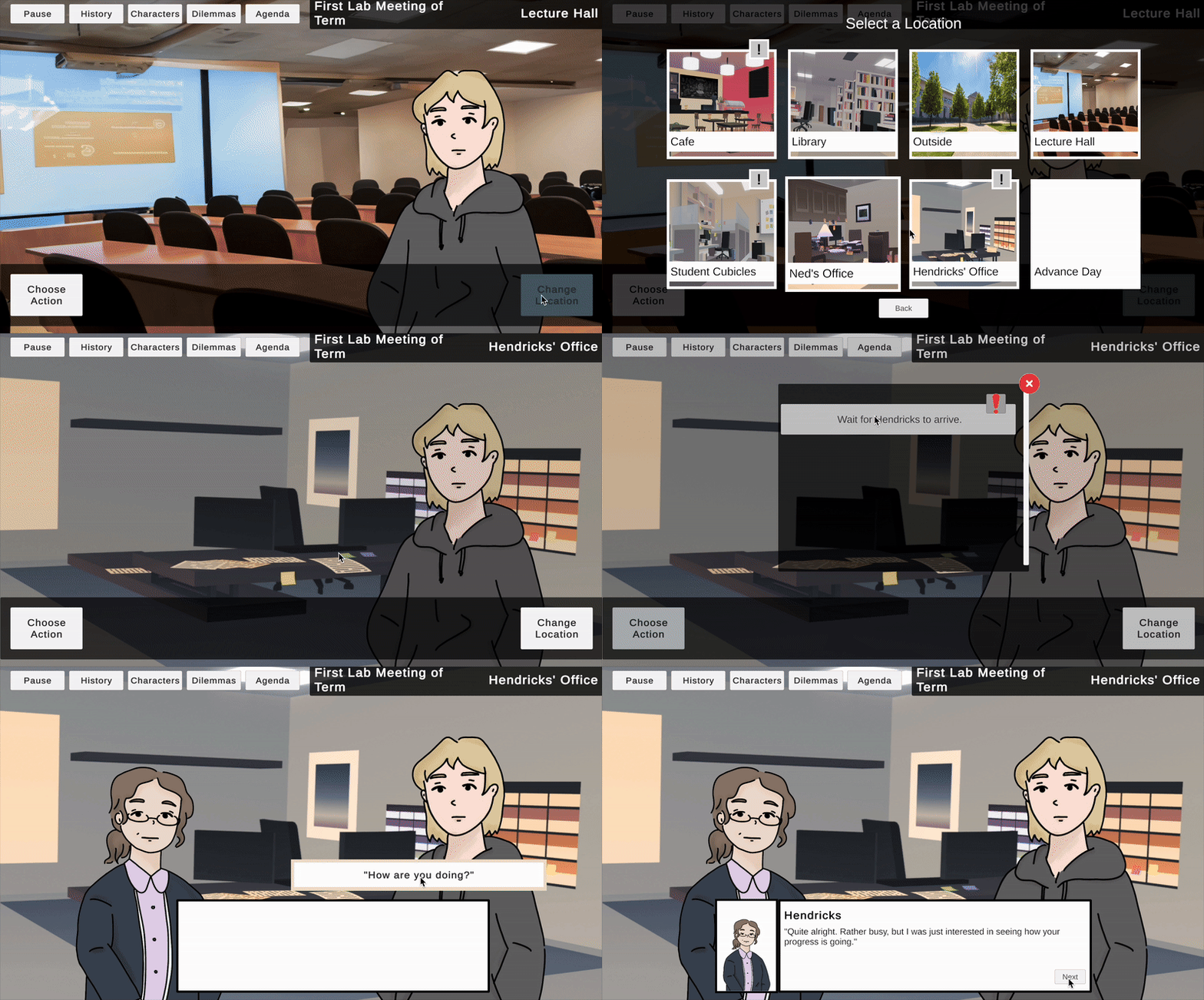
v.3 of the game preview
Project Highlights
-
Discovered that the consequence of a choice is more important than just the quantity of choices offered.
-
Conducted a between-subjects experiment comparing a static version of the game with a dynamic, AI-driven version.
-
Derived design implications for future Dynamic Educational Narratives (DENs) based on the qualitative insights.
Challenge
Previous research has demonstrated the positive effects that static interactive narrative games can have on motivation. Concurrently, advances in AI have made dynamic and adaptive approaches to interactive narrative increasingly accessible. However, limited work has explored the impact that dynamic narratives can have on learner motivation.
Would a dynamic, AI-driven narrative game with more player agency lead to higher motivation and more effective learning experience?
Approach
1. Comparing Academical 1.0 and 2.0
We compared two versions of Academical, a choice-based educational interactive narrative game about research ethics. One version employs a traditional hand-authored branching plot (i.e., static narrative) while the other dynamically sequences plots during play (i.e., dynamic narrative).
2. Conducted a between-subject experiment
Participants were randomly assigned to one of the two versions of Academical with a unique player ID to track their gameplay.
3. Mixed-methods data analysis
-
Thematic analysis with Self-Determination Theory framework for the qualitative data
-
Quantitative data analysis using IBM SPSS statistics to verify significant differences
📑
Approach
Collecting demographics Info
➡️
🎮
Pre-Survey
Randomly assigned to v.1 or v.2
📑
➡️
Post-Survey
Measuring performance & open-ended comments
Key Findings
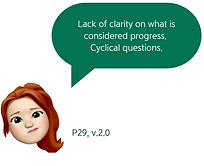
1. Dynamism had a risk of confusion.
While it did provide more chance of exploration and possibilities, looping in dynamic content occurred when learning goals weren't completed and negatively impacted players' feelings of competence.
2. Visual feedback building connection
Characters' facial reactions to player choices led to emotional responses, which increased competence and relatedness as well.
3. Consequential choices matter
While it was designed for players' exploration, players rather sought for meaningful consequences or long-term effects of each choice with clear and visible consequences.


Design Implications for DENs
1. Include responsive, graphical, and consequential feedback
Immediate visual feedback is a crucial tool to illustrate consequences that players' choices create. This leads to higher competence and relatedness to the overall game and characters.
2. Loops and dialogue hubs should be avoided
The "Spoke and Hub" pattern should mostly be avoided or implemented with care and cleverness to provoke sense of constant progression and repercussions.
3. Provide role-playing opportunities
Balancing pedagogical content with expressive or humorous elements increased the perceived relatedness of players, as they could more easily put themselves in the characters’ shoes. Furthermore, incorporating entertaining gameplay options for players to explore while interweaving educational content would maximize motivation.